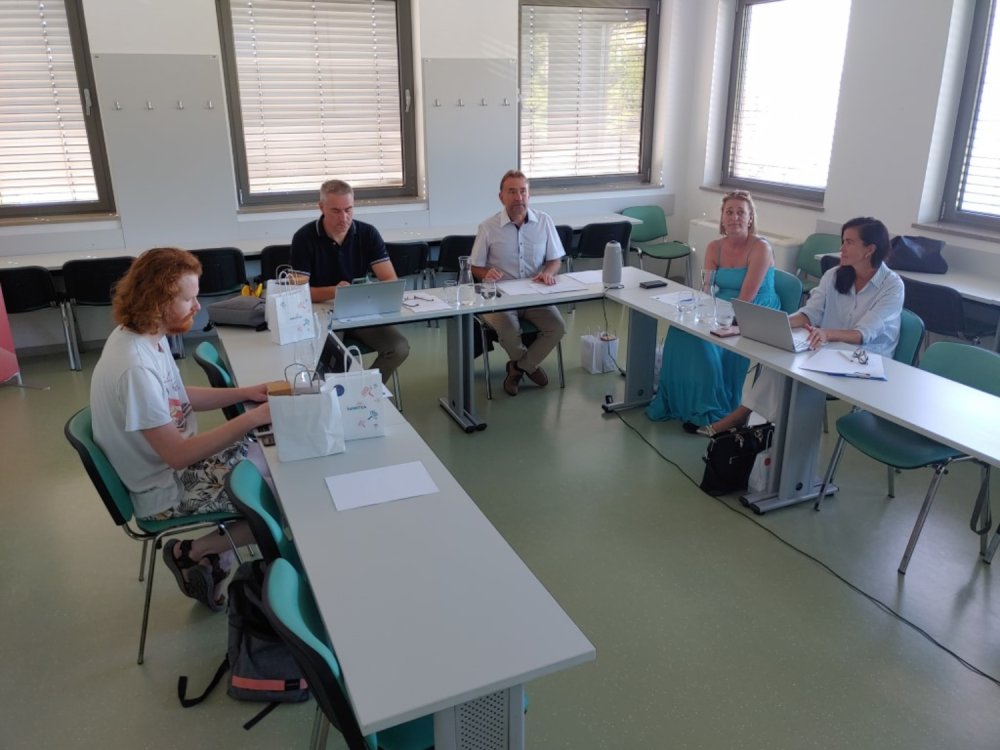
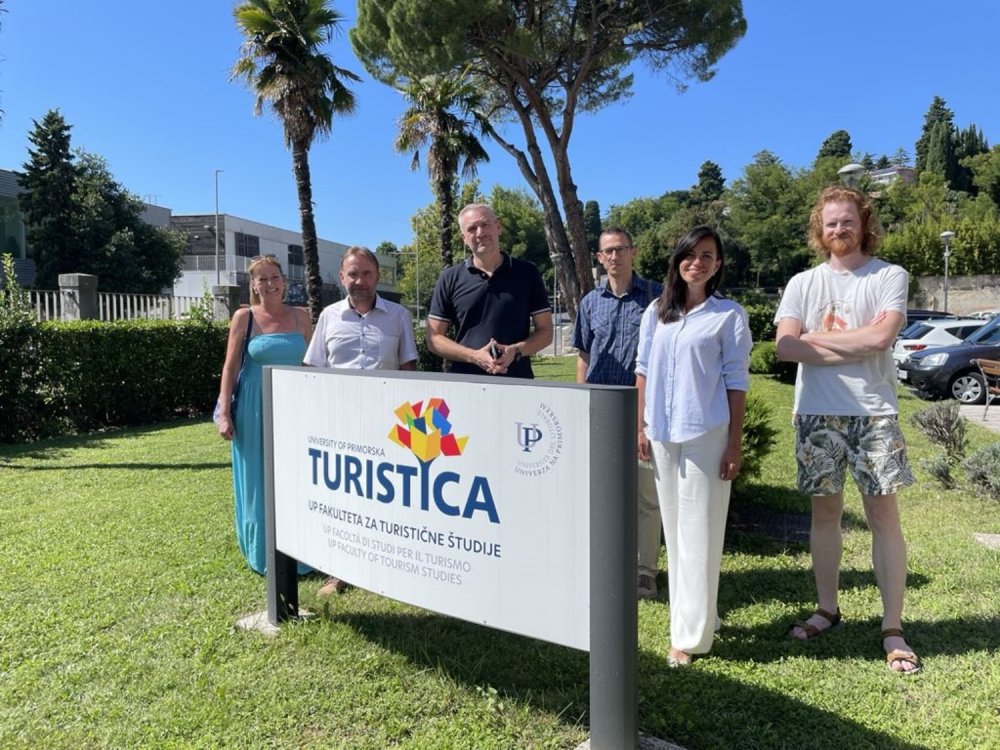
On Friday, September 5, 2025, UP FTŠ Turistica hosted the 3rd central coordination meeting of the partners of the Erasmus+ project VR EU Hoteliers (Application of Virtual Reality to the European Hospitality and Tourism Educational Programmes) in Portorož.
The project focuses on the development and implementation of a virtual reality application aimed at improving practical training in hospitality and tourism, enhancing students’ competences, and fostering collaboration among educational institutions. In recent years, this area has become increasingly popular within academic research as well.
The application will feature three modules covering hotel rooms, as well as service and kitchen work in hotel restaurants. Such applications provide experiential learning opportunities in a safe, simulated environment. Within the project, representatives from UP FTŠ Turistica, led by Assoc. Prof. Marko Kukanja, are developing the restaurant service module. This module will include three scenarios: setting table arrangements, understanding wine service inventory, and learning different table layout styles. The simulated restaurant environment is expected to improve the understanding of work organization without requiring visits to operational hospitality facilities, which can be logistically challenging and disruptive to day-to-day processes.
The meeting was attended by representatives of all project partners from the participating countries (Czech Republic, Slovakia, Spain, and Slovenia). The first part of the full-day meeting was dedicated to reviewing the work completed so far. Educational modules and scenarios have already been successfully designed, the virtual reality model has been developed, and the VR application has been established. An initial round of testing has been conducted, and the application has been presented to students to gather feedback.
The second part of the meeting focused on planning future activities, with the key next step being the pilot testing of the application with students and teachers in the upcoming academic year (2025/2026). This testing will serve as the basis for refining the application to deliver the most authentic experience possible in a virtual environment.
Participants also agreed that this project could serve as a strong foundation for future initiatives, particularly those that would leverage the synergies between virtual reality and today’s increasingly prevalent artificial intelligence technologies.
Project website: https://www.vrhoteliers.com