Erasmus+ blended intensive program (BIP) in the Karst region

  • Home
  • News
  • Erasmus+ blended intensive program (BIP) in the Karst region

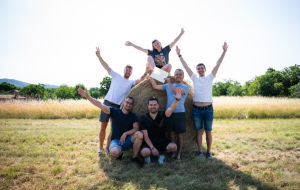
In the first half of May, a youth-oriented developmental boost is coming to the Karst region, specifically to the municipality of Miren-Kostanjevica. Twenty-eight undergraduate and graduate students of tourism and professors from Portugal, Germany, and Slovenia will participate. A week full of educational activities, speakers, networking, and inspiration is anticipated. A hackathon will also be organized, inviting students to tackle seven local challenges.

This time the blended mobility between May 3, 2024, and May 11, 2024, will be hosted by the University of Primorska, Faculty of Tourism Studies Turistica, in the Karst region, in the municipality of Miren-Kostanjevica. Undergraduate and graduate students as well as professors from Portugal (Universidade Lusófona), Germany (Munich University of Applied Sciences), and Slovenia (UP FTŠ Turistica) will come to rural Karst. As part of the program, students will take the course 'Sustainable Tourism Entrepreneurship and Digital Innovation,' which earns them 3 ECTS points. Before the physical part, two preparatory online meetings were carried out on April 24, 2024, and April 26, 2024. Ana Jemec Špik, Head of Data Analytics and Information Center for Tourism at the Slovenian Tourist Board, addressed the students at one of the virtual meetings.

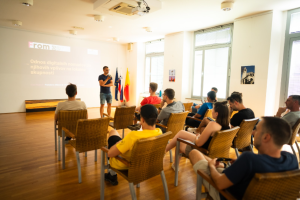
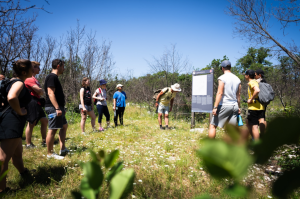
Participants can expect a dynamic and rich program: lectures, networking with distinguished representatives from the industry, visits to good local practices, networking with local providers, excursions, a three-day hackathon where students will work in mixed groups to solve local challenges, and more.

The rural environment was especially chosen for the program's realisation. We aim for students to get a closer look at the developmental dynamics of rural tourism or, in this case, the successful tourist destination of Miren-Kras. Such areas are highly specific, intertwined with challenges and opportunities, and serve as excellent laboratories for the development of environmental and socially sustainable approaches. In addition to learning, students will contribute to the local development and revitalization with their knowledge, international experiences/perspectives, and innovative approaches.

As Tadej Rogelja, mag., coordinator of the BIP and assistant at UP FTŠ Turistica, says: 'I am well acquainted with the developmental dynamics of rural tourism, as I have been actively involved in rural tourism in various ways since childhood (president of a local association, member of a family business, founder of a start-up empowering micro-providers, etc.). Local actors here often face numerous developmental challenges such as youth emigration, isolation, lack of connectivity, education, digital literacy, lack of capital, etc., which significantly affect the exploitation of potentials (development), work optimization, innovation, and increasing the added value of tourism. We want to bring ambitious young people to rural areas who can enrich such areas with fresh ideas, alternative perspectives, and an entrepreneurial spirit, while also gaining invaluable practical experience. Peaceful and picturesque rural villages, nature, forests, authentic local offer, gastronomy, people... all these are elements that gain value in the eyes of visitors... arousing the desire for quality retreat/leisure, relaxation, and leisure time... Can we connect, open up, ... and harness our uniqueness sustainably?'

Assoc. prof. Dejan Križaj, lecturer at UP FTŠ Turistica, adds: 'I am delighted to mentor and observe how the next generation of tourism professionals tackles the organization of the Erasmus+ blended intensive program in the Karst - the first one hosted by the University of Primorska in Slovenia. The program offers excellent opportunities for international exchange of knowledge and cultural specifics and provides an opportunity for participants to contribute with unburdened and fresh perspectives to solving the local challenges faced by rural and peripheral tourism in Slovenia and globally.

Between May 4, 2024, and May 11, 2024, as part of the program, there will also be 10 public events held in the former village school in Temnica, located in the Karst region. The local and wider community is invited to attend. Due to the dynamics of group work, available spots are limited, so pre-registration is required. Participation is free of charge, and the lectures and events will be carried out in English. To attend the upcoming events, which are open to the public, you can register via the form found at the bottom of this post.


Sunday, May 5, 2024 

  • 9:15 - 10.45 - Lecture: "The destination management organisation in its new role as a living space designer: initiator/catalyst for innovation and entrepreneurship" - Dr. Marcus Pillmayer

  • 11.00 - 12.00 - Lecture: Lessons from Product and Business Development at a Travel Agency - Rudi Medved

  • 21.00 - 22.30 - International night; you  can bring along some degustation products

Wednesday, May 8, 2024

  • 8.30 - 10.00 - Hackathon: Students will tackle seven local challenges and present proposed solutions/ideas on Friday. We are looking for local youth to join international teams and assist them in navigating the local environment. You will also help students outside of the mentioned hours. Instructions will be sent to your email
  • 20.00 - 22.00 - Screening of the film 'Rooted in Code' followed by a discussion with the author Nejc Trampuž

Thursday, May 9, 2024

  • 9.00 - 10.00 - Lecture: Introduction to sustainable tourism and the future:regenerative tourism - Dr. Marta Bubicz
  • 10.30 - 12.00 - Lecture: The carrying capacity of tourist destinations; How much is too much? - CIPRA Slovenija 

Petek, 10.5. 2024

  • 9.30 - 10.30, predavanje: The importance of digital architecture in tourism to harness the potential of artificial intelligence in sales and travel planning, Matej Kalan (Forward).
  • 15.00 - 18.00, Prezentacija idejnih rešitev; Hackathon
  • 18.00 - 23.00, Goodbye Party @Vojščica športni park v organizaciji ŠKTD Farjovca

Na dogodek se lahko prijavite prek povezave tukaj


Blended Intensive Programs (BIPs) are programs that utilize innovative methods of learning and teaching, including online collaboration. These programs involve practical learning, where transnational and transdisciplinary groups work together to solve challenges. The purpose of BIPs is to enable new and more flexible forms of student and staff exchanges, combining physical and virtual mobility. Participants in BIPs are students and staff from partner universities. The program includes a mandatory virtual component and a mandatory physical component, the latter lasting for at least 5 consecutive days. A successfully completed BIP program is evaluated with a minimum of 3 ECTS credits.